
The Wing Franchise Market: Why Wings Keep Winning (and Where the Growth Is Headed)
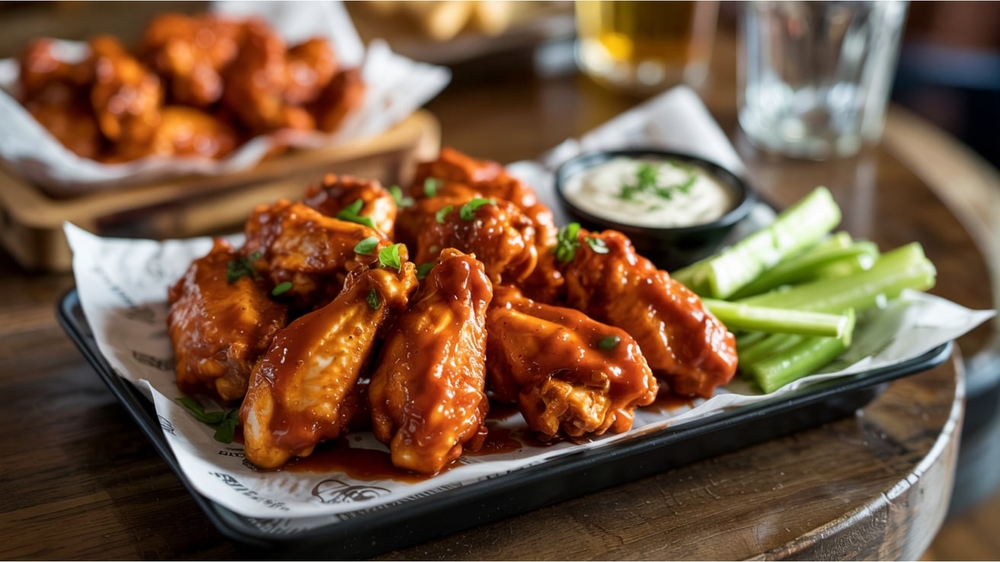
Chicken wings have moved from “game-day snack” to everyday craving—and that’s exactly why wing-focused franchise brands keep expanding. Wings check a lot of modern QSR/fast-casual boxes: they’re highly flavorable, easy to bundle, deliver well, and fit both indulgent and “high-protein” positioning. Add in a menu that can be simplified operationally (relative to full scratch kitchens), and you get a category that has attracted both first-time franchisees and sophisticated multi-unit operators.
A fun way to see how deeply wings are baked into American food culture is the annual Super Bowl “wing forecast.” For Super Bowl LIX, the National Chicken Council projected Americans would consume about 1.47 billion wings. Even in years when consumers trade down or reduce discretionary spending, wings tend to stay resilient because they’re a relatively affordable indulgence—especially when promoted as bundles, party packs, and family meals.
All of this is represented in the wing franchise growth that has been incredibly persistent over time and continues to show how incredibly resilient the demand is for the wing franchise segment.
Below is a practical, franchise-minded look at what’s driving the wing market, the trends shaping growth, and an overview of several top wing franchise brands.
What’s Driving Growth in Wing Concepts
1) Wings are “flavor platforms,” not just a product
Wings are one of the easiest menu items to innovate without reinventing the kitchen. Brands can launch limited-time flavors, dry rubs, heat-level challenges, regionally inspired sauces, or influencer collabs with minimal operational changes. That matters for franchising: you can refresh marketing and drive repeat visits without changing equipment, retraining cooks from scratch, or adding complicated prep.
2) Delivery and off-premise fit the category unusually well
Wings travel better than many fried foods because sauces can be separated, tossed to order, or offered as dry rubs. Brands have leaned into:
-
Bundles (12/24/50 wings, family packs)
-
Combo meals (wings + fries + drink)
-
Catering/party platters for sports and group occasions
This off-premise strength also supports flexible real estate strategies: smaller footprints, higher throughput, and in some cases non-traditional locations.
3) Menu adjacency expands the addressable market
Many “wing brands” are no longer just wings. They’ve expanded into tenders, chicken sandwiches, fries, and shareables—broadening daypart reach and helping with family decision-making (“someone wants tenders, someone wants boneless, someone wants a sandwich”).
4) Franchise scalability improves when formats get simpler
The modern playbook for growth is operational focus:
-
Tight core menu
-
Strong flavor differentiation
-
Consistent supply chain
-
High throughput kitchens
-
Digital ordering as a default behavior
Even legacy wing concepts have adapted by emphasizing speed, packaging, and off-premise-friendly menus.
The Big Headwinds Franchisees Need to Watch
1) Commodity volatility
Wings are a commodity protein, and pricing can swing with supply, demand, and broader poultry market dynamics. In wing-heavy concepts, food cost management becomes a core competency—especially around major demand spikes like football season. Some industry analysis has noted year-over-year changes in wholesale wing pricing in 2024–2025 and the push/pull between wing demand and other chicken cuts (including growing use of breast meat for “boneless wings”).
Franchise implication: great operators win through disciplined purchasing (where allowed), smart promos, price architecture (boneless vs traditional), and upsells that protect margin.
2) A crowded competitive set
“Wings” aren’t only sold by wing brands. Casual dining, pizza chains, sandwich concepts, and bar-and-grill operators all compete for the same occasion. A recent taste test comparison even lined up wings from multiple large chains, reinforcing how wide the competitive field really is.
Franchise implication: brand differentiation (flavors, speed, digital experience) matters more than ever.
3) Labor + speed expectations
Consumers increasingly expect fast-casual quality with QSR speed. That pressure pushes brands toward:
-
streamlined stations
-
batch/hold vs cook-to-order balance
-
kitchen display systems
-
strong training systems
Where the Wing Franchise Market Is Headed
Drive-thru and throughput focus
Many chicken concepts are evolving toward drive-thru and high off-premise mix. Zaxby’s, for example, explicitly highlights the trend toward drive-thru in its development approach.
Smaller footprints and non-traditional units
Wing brands are experimenting with:
-
smaller inline units
-
food halls
-
airports and travel hubs
-
“remote kitchen” or delivery-first models
Bonchon, for instance, has discussed flexible formats and non-traditional locations (including remote kitchens and hotels).
Continued international expansion
Some of the most aggressive growth is global. Wingstop announced the opening of its 3,000th restaurant globally in late 2025, signaling how wings translate across markets.
Overview of Top Wing Franchise Brands
Below are several of the most prominent wing and wing-adjacent franchise brands, with notes on positioning and why they matter in the category.
1) Wingstop (Fast Casual / Off-Premise Powerhouse)
Why it’s a market leader: Wingstop has built a high-recognition wing brand with strong digital/off-premise performance and a simple product story: wings + fries + flavors.
Scale signals:
-
2,353 Wingstop locations in the U.S. (as of Oct. 6, 2025).
-
Wingstop’s investor relations announced its 3,000th restaurant globally (Nov. 26, 2025).
Growth narrative: Wingstop has posted notable same-store sales performance in recent periods; Technomic highlighted Q3 2024 domestic same-store sales growth of 20.9% and continued momentum.
Franchise takeaway: If you’re evaluating Wingstop-like concepts, pay special attention to (1) digital ordering mix, (2) unit-level throughput during peak hours, and (3) real estate strategy (inline vs endcap vs freestanding).
2) Buffalo Wild Wings (Sports Bar / Hybrid Off-Premise)
Why it’s significant: Buffalo Wild Wings (“B-Dubs”) sits at the intersection of wings, sports entertainment, and bar-and-grill casual dining. It competes on the experience as much as the menu, and it has also pushed off-premise channels.
Scale signals: 1,380 Buffalo Wild Wings locations in the U.S. (as of Dec. 9, 2025).
Performance insights: FSR has reported on BWW’s unit count dynamics and noted franchise performance metrics such as average unit volumes (AUV) in its coverage of the brand’s system trends.
Franchise takeaway: This is a different operational animal than a pure fast-casual wing box. Franchisees should model labor, alcohol mix (if applicable), and real estate costs very differently than a QSR wing brand.
3) Zaxby’s (Chicken Fingers + Wings, Drive-Thru Friendly)
Why it belongs in the wing conversation: Zaxby’s is often thought of as tenders-first, but it competes strongly in the broader chicken/wing occasion—especially in the Southeast and growth markets.
Real estate/format direction: Zaxby’s franchise site emphasizes freestanding, drive-thru-oriented restaurants in core markets and notes the broader trend toward drive-thru.
Scale signals: 826+ locations.
Franchise takeaway: For many operators, Zaxby’s is about mastering throughput and consistency with a broader chicken menu that includes wings as part of a bigger platform.
4) Wing Zone (Fast Casual / Smaller Footprint Potential)
Positioning: Wing Zone leans into cooked-to-order flavor variety and a fast-casual model that can work in smaller footprints.
Growth messaging: Wing Zone’s franchise guide cites 31 locations in the U.S. and 30 restaurants internationally, alongside growth targets.
Franchise takeaway: Smaller or emerging concepts can offer territory availability and growth runway, but franchisees should be extra rigorous on unit economics, local marketing requirements, and operational support depth.
5) Bonchon (Korean Fried Chicken / Premium Flavor Differentiation)
Why it’s a strong “next-wave” wing brand: Bonchon is part of the broader Korean fried chicken trend, competing on craveable texture, bold sauces, and a premium fast-casual experience.
Format flexibility: Bonchon has highlighted multiple formats and non-traditional locations, including remote kitchens and hotels.
Growth story: QSR coverage has discussed Bonchon’s development pace and expectations for openings.
Franchise takeaway: Bonchon is a brand differentiation play—often higher check averages, strong flavor identity, and a potentially different customer demographic than classic buffalo wing concepts.
6) bb.q Chicken (Global Brand / Korean-Style Expansion)
Positioning: bb.q Chicken is another Korean fried chicken player, and it stands out as part of a larger global organization (Genesis BBQ Group).
Expansion signal: BusinessKorea reported bb.q Chicken’s plan to open 100 more stores in the U.S. in a given year as part of its global push.
(Brand location finders also indicate broad U.S. presence via the company’s locator experience.)
Franchise takeaway: International brands can bring strong product DNA and proven systems, but franchisees should evaluate supply chain maturity in their region and how the concept performs outside its earliest U.S. strongholds.
7) Hooters (Legacy Wings + Sports Bar, Shifting Footprint)
Why it still matters: Hooters is a legacy wings-and-sports brand with strong recognition, even as it navigates a changing casual dining environment.
Scale signal: 208 Hooters locations in the U.S. (as of Nov. 3, 2025).
Industry coverage has also discussed shifts in the brand’s footprint and model.
Franchise takeaway: For legacy sports-bar wing brands, a franchise decision is often about real estate, alcohol economics, and brand repositioning—not just wings.
New Brands to look for in the wing franchise market:
Wingbay is a up and coming wing franchise system based in the Houston, Texas market. Strong unit financials, a visionary leader/founder and a very attractive franchise model. Learn more here: https://wingbay.com/page/franchising
What to Look for When Evaluating a Wing Franchise Opportunity
If you’re writing or assessing franchise positioning in this segment, these are the factors that separate the best systems from “me too” wing concepts:
-
Unit economics under commodity stress
How does the model hold up if wing costs rise materially? What’s the pricing strategy, and how elastic is demand? -
Off-premise excellence
Packaging, order accuracy, digital UX, delivery integration, and catering operations matter. Wings are a volume game. -
Operational simplicity and training
Sauce systems, prep procedures, cook times, and line design can make or break throughput. -
Brand differentiation
Is the concept “another buffalo wing place,” or does it own a distinct flavor space (Korean-style crunch, proprietary rubs, signature fries, etc.)? -
Real estate flexibility
Drive-thru capability, inline viability, and conversion potential can dramatically change your development options.
The wing franchise market is growing because it aligns with how customers eat today: bold flavors, shareable bundles, delivery-friendly menus, and repeatable operations. The winners are the brands that pair craveability with throughput and a disciplined approach to food costs—while using sauces, seasonings, and limited-time innovation to stay culturally relevant (especially around sports seasons).
For more information on how to franchise a wing restaurant business, contact Franchise Marketing Systems: www.FMSFranchise.com