
Wendy’s Franchise – The Story of an American Fast-Food Icon and the Future of Its Global Franchise System
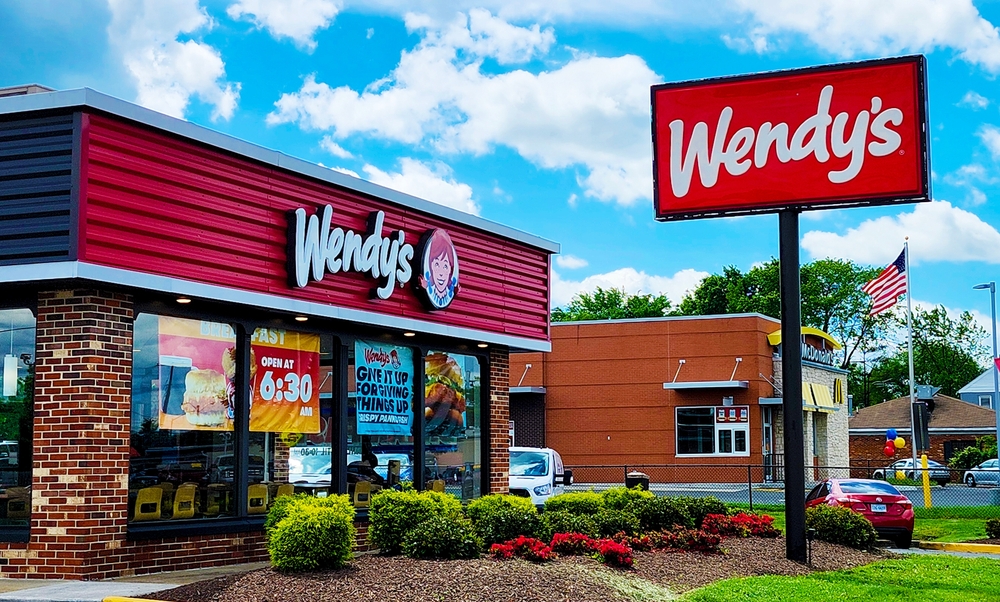
From a single hamburger restaurant in Columbus, Ohio, to more than 7,000 locations worldwide, Wendy’s has become one of the most recognizable names in the restaurant franchise industry. Today, the brand is navigating a changing fast-food market while working to strengthen franchisee profitability and expand internationally.
The Beginning of Wendy’s: Dave Thomas and a Different Kind of Hamburger Restaurant
The story of Wendy’s begins with one of the restaurant industry’s most recognizable entrepreneurs, Dave Thomas. Born in 1932, Thomas developed a passion for the restaurant business at an early age. After years of working in food service, including helping build the Kentucky Fried Chicken business, he recognized an opportunity to create a hamburger restaurant that emphasized quality, freshness, and customer service.
On November 15, 1969, Thomas opened the first Wendy’s Old Fashioned Hamburgers restaurant in Columbus, Ohio.
The restaurant was named after his daughter Melinda Lou Thomas, whose family nickname was Wendy. The name became the foundation of one of the most recognizable restaurant brands in American history.
Thomas believed that consumers wanted something different from the traditional fast-food hamburger experience. His concept centered on fresh beef, hamburgers made to order, and a commitment to quality.
From the beginning, Wendy’s differentiated itself with square hamburger patties that extended beyond the bun, giving customers a visible reminder of the brand’s generous portions.
The original menu was relatively simple, featuring hamburgers, chili, French fries, beverages, and the now-famous Frosty dessert.
That straightforward operating model, combined with strong branding and consistent execution, helped Wendy’s establish a loyal customer following.
The Early Years: Innovation and Rapid Franchise Expansion
Wendy’s growth accelerated as Thomas recognized that franchising could provide the capital, entrepreneurial talent, and local market knowledge necessary to expand across the United States.
In 1973, Wendy’s began franchising its restaurant concept.
Rather than focusing exclusively on individual restaurant agreements, Thomas embraced larger geographic development arrangements, allowing qualified operators to develop multiple locations within cities and regions.
This approach helped Wendy’s grow quickly while maintaining a relatively consistent brand identity.
Several important milestones defined the company’s early expansion.
In 1970, Wendy’s introduced its influential Pick-Up Window drive-through concept. Although drive-through service already existed, Wendy’s helped popularize an efficient operating format that became central to the quick-service restaurant industry.
In 1975, Wendy’s entered Canada, opening its first international restaurant in Hamilton, Ontario.
In 1976, the company completed its initial public offering, providing additional capital and visibility.
By 1978, Wendy’s had reached 1,000 restaurants, achieving that milestone within approximately 100 months of opening its first location.
The brand continued introducing products and operating concepts that differentiated it from competitors, including salad bars, baked potatoes, and value-oriented menu offerings.
Building One of America’s Most Recognizable Restaurant Brands
One of Wendy’s greatest competitive advantages has been its ability to establish a recognizable brand personality.
During the 1980s, Wendy’s became famous for its advertising campaigns, particularly the iconic “Where’s the Beef?” campaign, which emphasized the size and quality of its hamburgers.
Dave Thomas eventually became the face of the company, appearing in hundreds of television commercials and creating a personal connection between the founder and Wendy’s customers.
His approachable personality helped distinguish Wendy’s from larger competitors.
Thomas also believed that successful businesses should contribute to their communities.
As an adopted child himself, he became a strong advocate for adoption and foster care initiatives. In 1992, he established the Dave Thomas Foundation for Adoption, which continues to support efforts to find permanent families for children in foster care.
Following Thomas’s death in 2002, Wendy’s continued expanding its menu, restaurant formats, and international presence.
The company introduced products such as the Baconator, expanded its chicken sandwich offerings, and eventually entered the breakfast market on a national scale.
Wendy’s has also embraced digital ordering, loyalty programs, delivery platforms, and restaurant technology to remain competitive in a rapidly changing restaurant industry.
Wendy’s Franchise System Today: A Global Restaurant Network
As of September 27, 2026, Wendy’s reported 7,194 restaurants worldwide, making it one of the largest hamburger-focused quick-service restaurant systems.
The network includes 5,711 restaurants in the United States and 1,483 international locations.
Wendy’s operates primarily through franchising, with independent franchise owners responsible for the majority of the brand’s restaurants.
This franchise-oriented business model allows Wendy’s to generate revenue through royalties, franchise fees, rental arrangements, and other franchise-related activities while franchisees invest in and operate restaurants.
The model also creates a significant alignment between the franchisor’s performance and the success of its franchise operators.
Wendy’s Global Franchise System at a Glance
|
Key metric
|
Reported figure
|
|---|---|
|
Year founded
|
1969
|
|
Franchising began
|
1973
|
|
Global restaurant count
|
7,194
|
|
U.S. restaurant count
|
5,711
|
|
International restaurant count
|
1,483
|
|
2025 global systemwide sales
|
Approximately $14.0 billion
|
|
Q3 2026 global systemwide sales
|
Approximately $3.33 billion
|
Restaurant counts are as of September 27, 2026. Financial figures are from Wendy’s published results. Systemwide sales include both company-operated and franchised restaurants and are not the same as corporate revenue.
What Makes the Wendy’s Franchise Model Attractive?
Wendy’s has several characteristics that distinguish it from smaller or emerging restaurant franchise systems.
First, the brand has decades of operating history and substantial consumer recognition. A new Wendy’s franchise operator benefits from a nationally recognized name, established products, and a marketing infrastructure that would be difficult for an independent restaurant owner to replicate.
Second, Wendy’s has a developed supply chain and established restaurant operating systems. Standardized processes support purchasing, food preparation, training, restaurant design, and brand consistency.
Third, Wendy’s offers multiple revenue opportunities throughout the day, including lunch, dinner, beverages, desserts, and breakfast where supported by the location’s operating strategy.
Finally, the company has extensive experience working with multi-unit franchise operators.
For qualified investors, operating multiple restaurants may create opportunities to spread certain management and administrative expenses across a larger business.
However, these advantages do not eliminate the challenges associated with restaurant ownership. Wendy’s operators must still manage labor, food costs, real estate expenses, financing, competition, and changing consumer demand.
The Current State of Wendy’s: A Major Brand in Transition
Although Wendy’s remains a major force in the global restaurant industry, its recent financial results demonstrate that even established franchise systems face significant challenges.
During 2025, Wendy’s reported approximately $14.0 billion in global systemwide sales, representing a 3.5% decline from the prior year.
Despite that sales decline, the company achieved net global restaurant growth of 157 locations during 2025, supported by international expansion.
The challenges became more pronounced in 2026.
In its third-quarter earnings announcement, released November 5, 2026, Wendy’s reported a 5.9% decline in global systemwide sales compared with the same quarter in 2025.
U.S. same-restaurant sales declined 5.7%, while international same-restaurant sales declined 2.2%.
The company also reported third-quarter net income of approximately $15.1 million, compared with $44.3 million during the comparable 2025 quarter.
For the first nine months of 2026, Wendy’s experienced a net reduction of 203 restaurants globally, reflecting a substantial contraction in the United States that was partially offset by international growth.
These results highlight the challenges facing mature restaurant franchise systems as consumer spending patterns change and competition for restaurant traffic intensifies.
Wendy’s New Strategy: Dave’s Way and Franchise System Optimization
In 2026, Wendy’s introduced a multi-year strategy called Dave’s Way, designed to improve customer traffic, increase market share, and strengthen restaurant-level profitability.
The strategy represents an effort to reconnect the brand with the operating principles established by Dave Thomas while adapting to today’s competitive restaurant environment.
Important initiatives include improving menu offerings, strengthening marketing execution, expanding digital business, and addressing underperforming restaurants.
One particularly significant change involves Wendy’s breakfast strategy. Rather than requiring a uniform approach across all restaurants, Wendy’s is moving toward a more location-specific model. Management believes this approach could unlock up to $200 million in restaurant-level EBITDA across the system, although that figure is a company projection rather than an achieved result.
Wendy’s is also restructuring portions of its franchise portfolio. In November 2026, the company announced a letter of intent to acquire up to 163 restaurants from Meritage Hospitality Group, subject to definitive agreements, court approval, and other conditions.
The company also plans to facilitate transfers of certain franchised restaurants to stronger, well-capitalized operators.
These actions illustrate an important reality of mature franchise systems: continued success requires more than selling new franchises. Franchisors must actively support existing operators, protect restaurant economics, and maintain the financial health of their franchise networks.
International Expansion Remains a Major Growth Opportunity
While Wendy’s has experienced challenges in the United States, international development remains an important component of its long-term strategy.
International systemwide sales grew 8.1% in 2025, even as global sales declined.
By the third quarter of 2026, Wendy’s international restaurant count had increased to 1,483, compared with 1,384 one year earlier.
This demonstrates the potential for Wendy’s to expand beyond its mature U.S. restaurant network.
International franchising presents opportunities for regional developers and experienced restaurant operators to introduce the brand into new markets.
However, international expansion also requires careful consideration of local consumer preferences, supply chains, real estate availability, labor conditions, and regulatory requirements.
For Wendy’s, the ability to adapt its restaurant model to different markets while maintaining consistent brand standards will be important to its future growth.
What Wendy’s Teaches Us About Building a Successful Franchise Brand
The Wendy’s story provides several important lessons for entrepreneurs and business owners considering franchising.
The first is the importance of differentiation. Dave Thomas did not invent the hamburger restaurant, but he created a distinctive concept centered on fresh ingredients, quality, and recognizable products.
The second is the value of a repeatable operating model. Wendy’s growth was made possible by systems that could be replicated across hundreds and eventually thousands of restaurants.
The third is the importance of branding. Wendy’s demonstrated that memorable advertising, founder visibility, and consistent brand messaging can create tremendous long-term value.
The fourth is the power of multi-unit franchising. By working with capable regional operators, Wendy’s accelerated development while leveraging franchisee capital and local operating expertise.
Perhaps the most important lesson is that franchise systems must continually evolve.
Consumer expectations, operating costs, technology, and competition change over time. Even brands with decades of success must reinvest in their systems and address underperforming markets.
The Future of Wendy’s Franchise System
Wendy’s enters its next chapter with significant strengths, including global brand recognition, a substantial restaurant network, established franchise relationships, and decades of operating experience.
At the same time, the company’s recent results show that its turnaround is far from complete.
The success of Dave’s Way will depend on Wendy’s ability to rebuild U.S. restaurant traffic, improve franchisee profitability, execute its portfolio restructuring, and sustain international growth.
For prospective franchise investors, Wendy’s remains an example of the scale and brand value that franchising can create. However, any investment decision should involve careful review of the current Franchise Disclosure Document, development requirements, restaurant-level economics, and the performance of comparable existing locations.
The story that began with Dave Thomas opening a single restaurant in Columbus in 1969 has grown into an international franchise system spanning more than 7,000 locations.
Wendy’s greatest achievement may be the creation of a brand that has remained relevant for more than five decades. Its greatest challenge today is translating that enduring recognition into stronger restaurant performance and sustainable growth for the next generation of franchise operators.
For more information on franchising and how to franchise your brand, contact Franchise Marketing Systems: www.FMSFranchise.com